2026-11-23 ·
Step-by-Step Guide to Trenchless Sewer Line Replacement
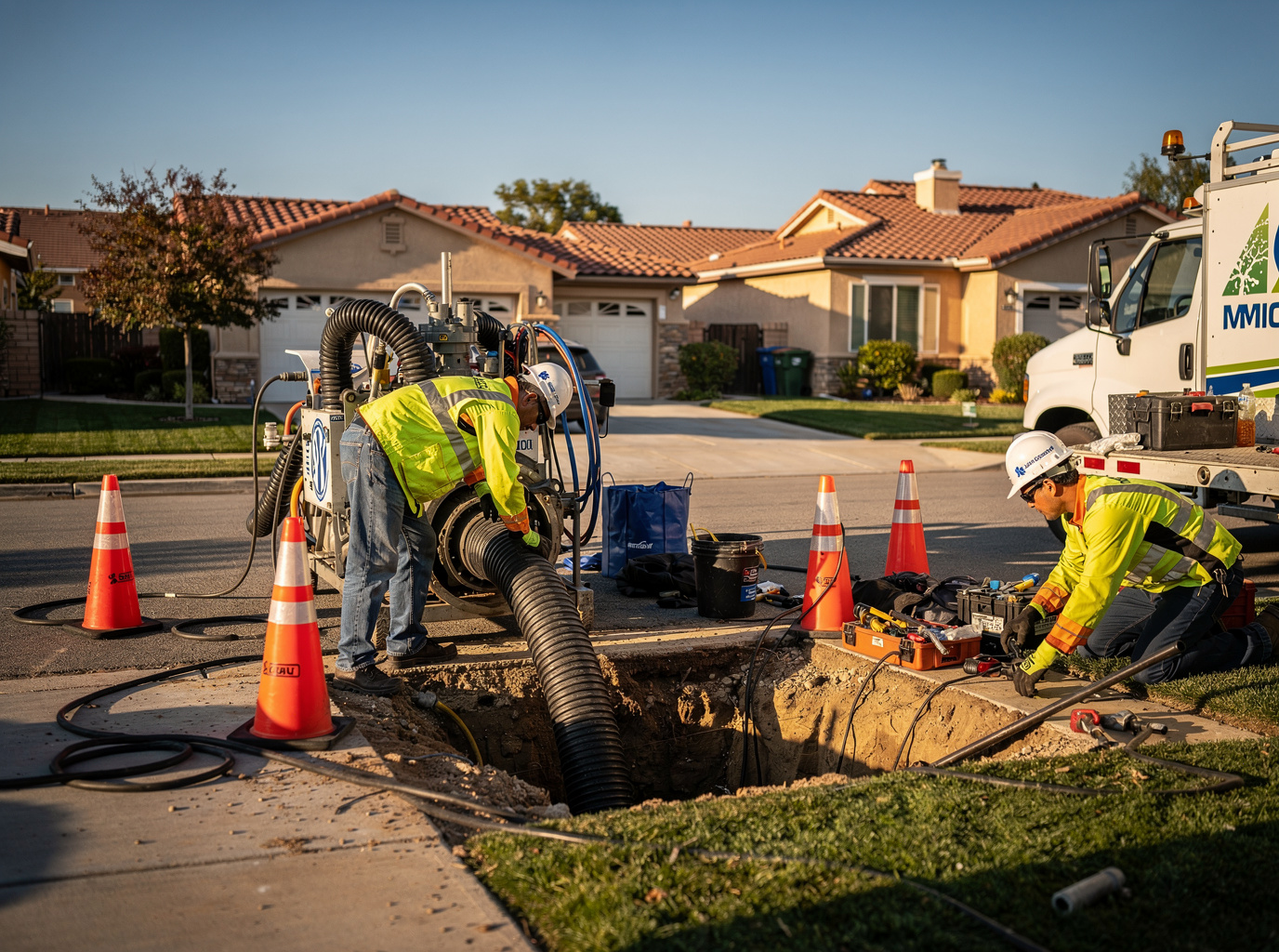
In Rancho Cucamonga, trenchless sewer line replacement follows five primary steps that take 2 to 5 days for most residential properties in areas such as Etiwanda or North Rancho Cucamonga. The process starts with camera inspection, moves through method selection between pipe bursting and CIPP, and ends with flow testing, all while avoiding the open trenches common in older San Bernardino County homes built before 1980.
Initial Camera Inspection and Diagnosis
Homeowners in Terra Vista or Victoria first notice slow drains or gurgling after heavy winter rains common to the hot-summer Mediterranean climate. A licensed technician inserts a waterproof camera through an existing cleanout to map the line, identify root intrusion or offset joints, and measure pipe diameter. This footage determines whether the line runs under driveways near Victoria Gardens or Central Park and reveals soil conditions that shift during summer heat. The inspection also notes proximity to nearby cities like Ontario or Upland where similar clay soils appear. Accurate mapping prevents unnecessary excavation and guides the exact length of replacement needed.
Selecting the Appropriate Trenchless Method
Once the camera report is reviewed, the crew chooses between trenchless pipe bursting for collapsed sections or CIPP pipe lining for cracks without full separation. Pipe bursting suits 4-inch to 6-inch clay lines common in South Rancho Cucamonga homes where ground movement from seasonal temperature swings has caused breaks. CIPP works better on longer straight runs under lawns in Downtown Rancho Cucamonga where minimal surface disturbance matters. Factors such as pipe age, surrounding utilities, and access points from the street determine the final choice. Crews based in Rancho Cucamonga review these details on-site before ordering materials.
Executing Pipe Bursting Replacement
Pipe bursting begins with two small access pits at each end of the damaged section. A bursting head is pulled through the old pipe, fracturing it outward while simultaneously drawing in new HDPE pipe. In neighborhoods like Etiwanda, crews often encounter compacted soil from decades of irrigation, requiring slower pull speeds to maintain alignment. The new pipe is fused on site to create a continuous run rated for 50-plus years. Work stays within the existing trench footprint, protecting mature trees and hardscaping typical around Central Park. Daily progress is tracked so residents know when water service can resume.
Installing CIPP Lining Where Suitable
For lines that remain structurally sound but show multiple cracks, CIPP lining is inverted into the pipe under pressure and cured with steam or hot water. The resin bonds to the interior walls, creating a smooth 6-millimeter to 9-millimeter thick barrier that restores flow. In Fontana and Upland border areas with higher water tables, crews monitor cure times closely because cooler morning temperatures in the Mediterranean climate can extend the process by several hours. The liner is trimmed at cleanouts and laterals are reopened robotically. This method avoids any surface digging beyond the initial entry point.
Final Flow Testing and Site Restoration
After either method, the crew performs a final camera inspection and hydrostatic test to confirm no leaks at connections. Water is run from multiple fixtures while monitoring flow rates at the street cleanout. Restoration includes backfilling pits with native soil, compacting in lifts, and replacing sod or concrete to match existing grades. Properties near the Rancho Cucamonga Epicenter often require extra care to avoid disturbing recent landscaping. Homeowners receive a video of the completed line and a maintenance guide tailored to local soil and root conditions. Signs of Sewer Line Trouble After Winter Rains in Rancho Cucamonga and What Affects Trenchless Sewer Line Replacement Cost in Rancho Cucamonga provide additional context for ongoing care.